
Exploring the history, archaeology, geography, and cultures of the Bible.
Episodes
Mar 2, 2022
Mar 2, 2022
1 hr 25 min
 Episode: Co-hosts Chris McKinny and Mary Buck discuss the discovery of the Lachish Letters (or Lachish Ostraca), and work through several example texts to help you understand their content and significance.
Hosts: Chris McKinny and Mary Buck
Series: STANE – “Special” Texts of the Ancient Near East. See our Amarna Letters, Mesha Stele and Introductory episodes in the same series.
Photo Attribution: By NenyaAleks - Own work, Public Domain, https://commons.wikimedia.org/w/index.php?curid=9781106
Feb 23, 2022
Feb 23, 2022
1 hr 25 sec
 Episode: A recent report - published in the very prestigious journal Nature - argued that the site of Tall al-Hammam and other sites in its vicinity were destroyed by an "airburst event" around 1650 BCE. https://www.nature.com/articles/s41598-021-97778-3 The underlying assumption of the article is that Tall al-Hammam is the site of Sodom and that the "airburst event" relates to the destruction of the cities of the Plain mentioned in Genesis 19. For a number of reasons, this article has been severely criticized for its handling of pictorial evidence, as well disagreements in interpretation regarding the archaeological data. For example, see here https://www.unm.edu/~mbeb/Publications/Boslough_Skeptical_Inquirer_Sodom_2022.pdf. In this episode, Chris and Kyle examine a more fundamental question - is Tall al-Hammam Sodom? This is part one in this series - covering much of the "background" details connected with Sodom and the cities of the Plain. The next part will cover the geographic details in Genesis itself. We have provided several maps for visualizing the discussion.
Hosts: Chris McKinny (Geshur Media) and Kyle Keimer (Macquarie University)
Give: Visit our Donate Page if you want to join the big leagues and become a regular donor.


Feb 16, 2022
Feb 16, 2022
1 hr 4 min
 Episode: What lies beneath Jerusalem? Join Kyle and Chris as they interview Andrew Lawler about his excellent and exciting new book Under Jerusalem: the Buried History of the World’s Most Contested City (also available via Audible.com as an audio book). In this interview, we discuss a variety of issues that Lawler covers in his book - he also gives some personal reflections on the writing and research involved with a book on Jerusalem’s complicated history (and present).
Guest: (From his website) Andrew Lawler is author of three books, Under Jerusalem: The Buried History of the World’s Most Contested City (Doubleday, 2021), The Secret Token: Myth, Obsession, and the Search for the Lost Colony of Roanoke, a national bestseller, and Why Did the Chicken Cross the World?: The Epic Saga of the Bird that Powers Civilization. As a journalist, he has written more than a thousand newspaper and magazine articles from more than two dozen countries. His byline has appeared in The New York Times, The Washington Post, National Geographic, Smithsonian, and many others. He is contributing writer for Science and contributing editor for Archaeology. Andrew’s work has appeared several times in The Best of Science and Nature Writing. 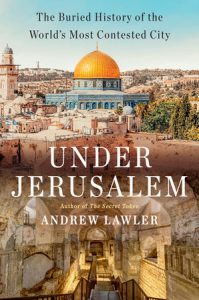
Give: Visit our Donate Page if you want to join the big leagues and become a regular donor.
 Photo: Archibald Heinemann, From Dan to Beersheba, p. 257
Feb 9, 2022
Feb 9, 2022
47 min
 Episode: In this episode Mark and Chris talk with Dr. K. Lawson Younger (Trinity Evangelical Divinity School) about the Contextual Approach and its benefits for interpreting Scripture with caution required to avoid the paradoxical dangers of "parallelomania" and "parallelophobia." Dr. Younger is an Assyriologist who also specializes on the Arameans, so naturally they had to pick his brain for info on the impact of the Assyrians and Arameans on ancient Israel, particularly during the Divided Monarchy. They also discuss the genre of ancient conquest accounts and how the book of Joshua fits that specific genre, an important interpretive aid to understanding Joshua.
Guest: (From the TIU website) Dr. K. Lawson Younger, Jr. (PhD. Sheffield University) is Professor of Old Testament, Semitic Languages, and Ancient Near Eastern History at Trinity Evangelical Divinity
School of Trinity International University, Deerfield, Illinois. A specialist in Assyriology, Aramaic, and Hebrew Bible, Younger has published numerous works involving ancient Near Eastern texts and their relationship to the Hebrew Bible. He is the author of A Political History of the Arameans: From their Origins to the End of Their Polities (2016), the Winner of the Biblical Archaeology Society 2017 Publication Award for Best Scholarly Book on Archaeology. He is also the author of Ancient Conquest Accounts: A Study of Ancient Near Eastern and Biblical History Writing (1990), and The NIV Application Commentary for Judges, Ruth (2002). He is the associate editor of the three-volume The Context of Scripture: Canonical Compositions, Monumental Inscriptions and Archival Documents from the Biblical World (Brill), the editor of volume 4 of The Context of Scripture: Supplements (2016), editor of Ugarit at Seventy-Five (2007), and the co-editor of The Canon in
Comparative Perspective (1991), Mesopotamia and the Bible: Comparative Explorations (2002) and “An Excellent Fortress for his Armies, a Refuge for the People”: Egyptological, Archaeological and Biblical Studies in Honor of James K. Hoffmeier (2020). He has also contributed to numerous collections of essays, dictionaries and journals. He is a past trustee of the American Schools of Oriental Research, as well as an active member of the American Oriental Society, the International Association of Assyriology, and the Society of Biblical Literature.

Among his many scholarly papers, he has given lectures at the British Academy, the Institute for the Study of the Ancient World at New York University, the Oriental Institute of the University of Chicago, the Vorderasiatisches Museum (Pergamonmuseum, Berlin), and the Israel Museum (Jerusalem). He was the Seymour Gitin Distinguished Professor at the Albright Institute of Archaeological Research in Jerusalem, Israel (2012–13). He is presently writing a book on Aramean Religion.
Give: Visit our Donate Page if you want to join the big leagues and become a regular donor.
Jan 26, 2022
Jan 26, 2022
1 hr 1 min
 Episode: Who was Adoni-bezek? (Judges 1:1–7) Geography in Judges is a new series where hosts Kyle and Chris (sometimes with friends) will discuss historical geographical and archaeological issues that arise in the Book of Judges. This weeks discussion is on the enigmatic character of Adoni-bezek (Judges 1:1–7). Who was he? Where was he from? What can geography and archaeology tell us about this character?
We would also like to point our listeners to a new online class at Jerusalem University College - the Archaeology of the Judean Shephelah https://juc.edu/academics/course-descriptions/course/archaeology-judean-shephelah/ co-taught by Chris McKinny and Kyle Keimer along with a whole host of excellent guest lectures from the leading archaeologists in the field. Sign-up today! https://www.juc.edu/juc-online/semester-learning/
Give: Visit our Donate Page if you want to join the big leagues and become a regular donor.
Images: Top image from https://palopenmaps.org/view, and the bottom image from https://bibleatlas.org/full/bezek.htm
Jan 12, 2022
Jan 12, 2022
37 min
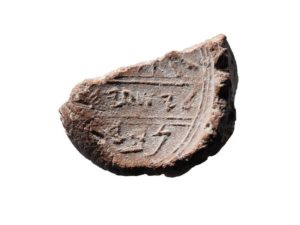 Episode: We discuss the alleged Isaiah Bulla (clay seal impression) with one of the finest epigraphers in the field. The seal was found by the Temple Mount in 2009 by Eilat Mazar, and first announced in Biblical Archaeology Review last month (February, 2018). Matt L. and Dru J. discuss the find with Prof. Christopher Rollston, who urges caution when making bold claims about the seal's link to the biblical prophet Isaiah. We also discuss our desire to make connections between archaeology and the bible, and for a material connection with the past.
 Guest: Professor Rollston is Associate Professor of Northwest Semitic languages and literatures at George Washington University. Rollston works in more than a dozen ancient and modern languages, including various ancient Semitic languages (e.g., Hebrew, Phoenician, Aramaic, Palmyrene, Nabataean, Ammonite, Moabite, Edomite, Ugaritic, Akkadian), several ancient and modern Indo-European languages (e.g., Hellenistic Greek, Classical Latin; Modern German, French, Spanish, and Italian), as well as Sahidic Coptic. He is the author of Enemies and Friends of the State: Ancient Prophecy in Context (Eisenbrauns), Writing and Literacy in the World of Ancient Israel: Epigraphic Evidence from the Iron Age (Atlanta: Society of Biblical Literature, 2010), which was selected by the American Schools of Oriental Research (in November 2011) as the recipient of the prestigious “Frank Moore Cross Prize for Northwest Semitic Epigraphy,” a prize named for the late Harvard University Professor Frank Cross. He has also edited several volumes. Needless to say, he's very accomplished in his field! (adapted from the GWU website).

Photo: Photo of seal impression, Ouria Tadmor. Copyright Eilat Mazar.
Dec 24, 2021
Dec 24, 2021
1 hr 33 min
 Episode: In part 2 of this series, Kyle and Chris discuss additional historical and archaeological aspects associated with the origin stories of Jesus as seen in Matthew and Luke. They discuss the archaeological background and traditions associated with the Church of the Nativity in Bethlehem. They also explain a number of other historical background elements connected with Matthew’s use of the Old Testament focusing – in particular – on the impact of the Neo-Assyrian and Neo-Babylonian conquests of Israel and Judah in prophetic literature and how that context still matters for how one reads the origin narrative of Jesus in Matthew.
Relevant Articles
The Accommodations of Joseph and Mary in Bethlehem: Κατάλυμα in Luke 2.7* STEPHEN C. CARLSON
Hosts: Chris McKinny and Kyle Keimer.
Give: Help support OnScript’s Biblical World HERE. Thanks to all of you who have supported us!
Image by Jeff Jacobs from Pixabay
Dec 22, 2021
Dec 22, 2021
1 hr 11 min
 Episode: Chris and Kyle talk about the archaeology and historical context of Christmas. They try not to be Grinches. This is part 1 of a two part series.
Hosts: Chris McKinny and Kyle Keimer.
Give: Help support OnScript’s Biblical World HERE. Thanks to all of you who have supported us!
Image by by Gerd Altmann from Pixabay
Dec 15, 2021
Dec 15, 2021
53 min
 Episode: Cyndi Parker speaks with Lynn Cohick about what it means to understand Jesus in his own cultural, political, social, and religious contexts.
Guest: Dr. Cyndi Parker, author of Encountering Jesus in the Real World of the Gospels (Hendrickson, 2021). Dr. Parker lived in Jerusalem for five years and currently teaches courses about the geographical, cultural, religious, and political context of the Bible at Jerusalem University College. She has led over forty trips in Israel, and she continues to develop innovative educational trips to Israel, seeking to inspire students of all ages through experiential education. Her research interests include biblical views of Place, Biblical History and Geography, and the correlation between Theology and Ecology (with a particular interest in Food Justice). She is the owner of www.NarrativeofPlace.com, and the host of the Context Matters and Israel Bible podcasts.
Give: Help support OnScript’s Biblical World HERE. Thanks to all of you who have supported us!
Nov 30, 2021
Nov 30, 2021
1 hr 9 min
 Episode: In this episode Chris and Kyle speak with Andrea Berlin about the Hasmonean expansion in the Galilee. The bigger historical picture is discussed, along with how to integrate text and archaeology. Andrea speaks about her work at Tel Anafa and Tel Qedesh and how the results at these two sites have helped to illuminate the “Galilee of the Nations” in the Hellenistic and Roman periods.
Guest: Andrea Berlin (James R. Wiseman Chair in Classical Archaeology, Professor of Archaeology and Religion, Boston University). See her recent book, The Middle Maccabees: Archaeology, History, and the Rise of the Hasmonean Kingdom (edited with Paul J. Kosmin). For more of Andrea’s work, see her Academia.edu page: https://bu.academia.edu/AndreaBerlin
Hosts: Chris and Kyle
Summary: Andrea, Chris, and Kyle discuss the following topics: the “Middle Maccabees” and Hasmonean expansion into the Galilee; relating text and archaeology; the dynamic changes in Hellenistic and Roman period Galilee; Andrea’s excavations at Tel Anafa and Tel Qedesh.
Give: Help support OnScript’s Biblical World HERE. Thanks to all of you who have supported us!